



Gutters work quietly, so most people forget about them until something goes wrong. The good news is that the signs of clogged gutters are easy to spot once you know what to look for. Catch them early, and you can avoid a wet basement, rotted wood, and costly repairs. Here are seven warning signs, plus what to do about each one.
Why Gutters Clog So Fast Around Chicago
Many Chicago-area homes sit under mature oaks and maples. In spring, they drop seeds and blossoms, and in fall they shed piles of leaves. Twigs, roof grit, and windblown dirt add to the mix. Once a downspout plugs, every storm makes the clog worse.
That matters because your roof sheds a lot of water. The U.S. Department of Energy’s guide to gutters and downspouts explains that runoff must flow well away from the foundation to keep basements dry. So when gutters back up, that water goes straight down next to your house.
Signs of Clogged Gutters You Can See From the Yard
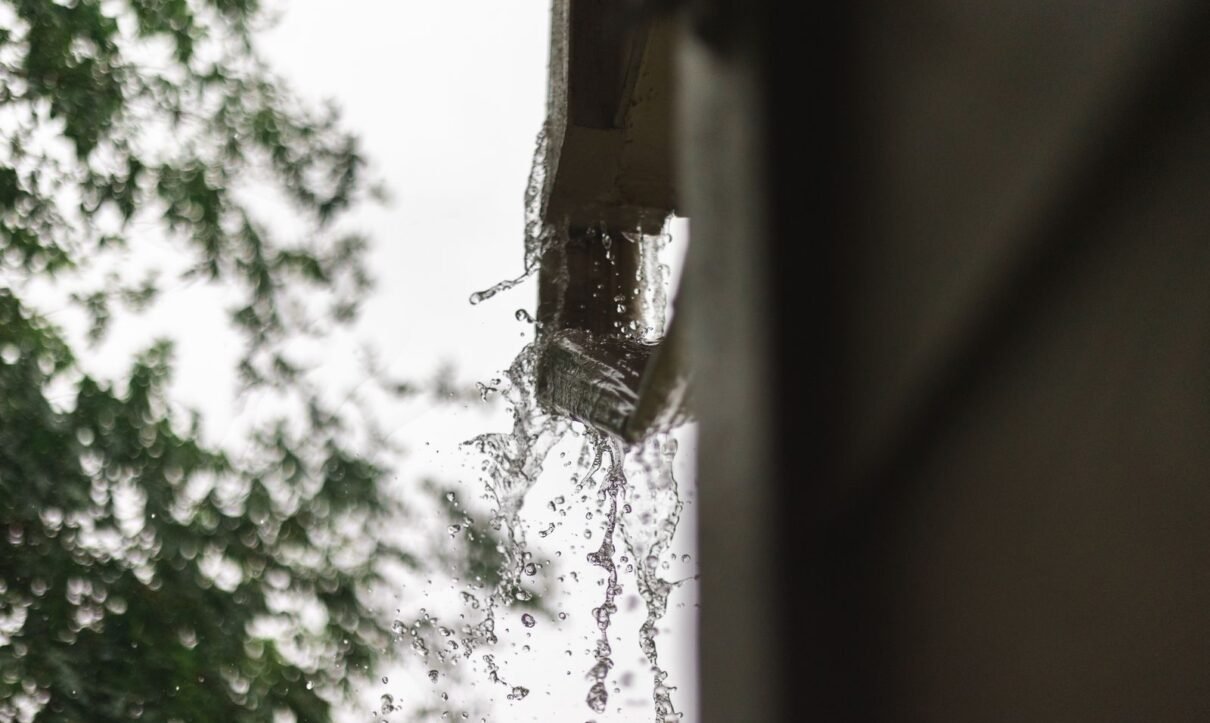
- Water spills over the edge. During a steady rain, water should run to the downspouts. If it pours over the front like a waterfall, the gutter or downspout is blocked.
- Gutters sag or pull away. Wet leaves and standing water are heavy. Over time, that weight bends the gutter and loosens the hangers.
- Plants grow along the roof line. Weeds, moss, and even small tree sprouts need soil and water to grow. When you see them up there, the gutter has turned into a planter.
- Streaks and peeling paint appear. Overflow runs down the siding and trim. As a result, you may notice dirty stripes, bubbling paint, or soft spots in the fascia board.
Signs of Clogged Gutters Inside and Below the House
- Water in the basement. Damp walls or puddles after a storm often trace back to the gutters. The Center for Neighborhood Technology shows how a downspout can flood a Chicago basement when water lands next to the foundation.
- Puddles and erosion near the foundation. Look for washed-out mulch, bare soil, or small trenches under the roof edge. These spots show where overflow keeps landing.
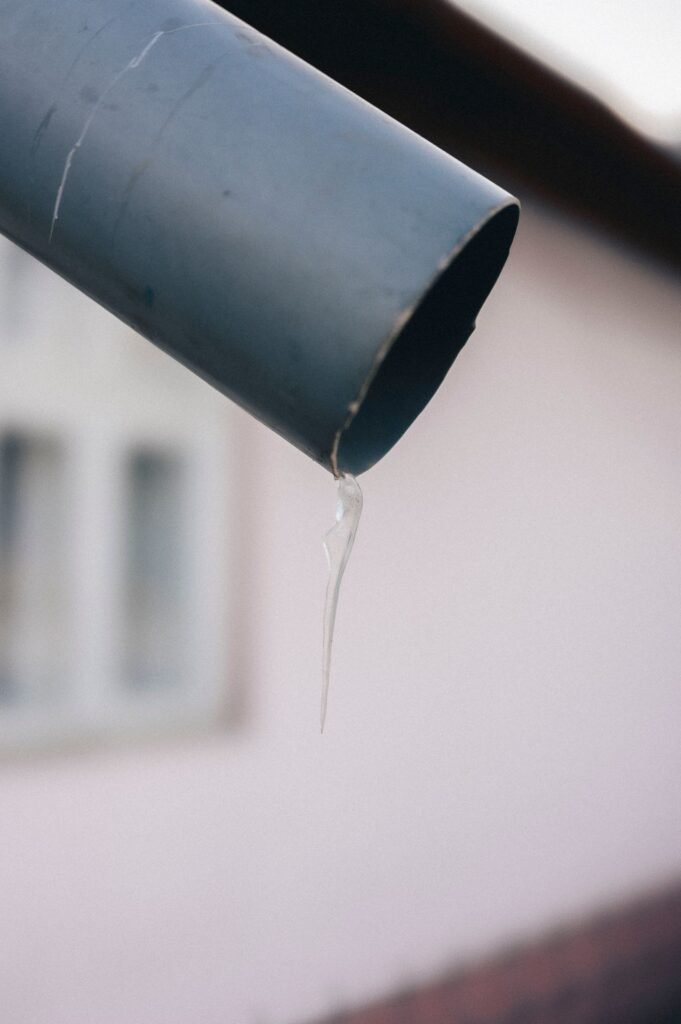
- Icicles and ice dams in winter. A few small icicles are normal. However, thick ice along the edge means water can’t drain, so it freezes and backs up under the shingles.
What Happens If You Wait
A blocked gutter rarely fixes itself. Instead, the damage grows with every storm. Trapped water rots the fascia and roof deck, and overflow soaks the soil around your foundation. In time, that can lead to cracks, leaks, and mold. Standing water also draws mosquitoes, while heavy debris can tear whole sections off the house.
What to Do When You Notice Signs of Clogged Gutters
First, check the downspouts from the ground. If water barely trickles out during rain, the clog is likely at the top or in an elbow. Next, clear the path below each downspout so water can flow away from the house.
For anything on the roof line, think twice before you climb. Ladder work on wet or uneven ground is risky, especially on a two-story home. That is why many homeowners leave it to a crew with the right gear and insurance. If clogs keep coming back, ask about gutter guards to keep most debris out.
How Often Should Gutters Be Cleaned?
Most homes need cleaning twice a year, once in late spring and again in late fall. If tall trees hang over your roof, plan on a third visit. Also, check the gutters after big summer storms, since heavy wind can fill them in a single night. For more reasons to stay on schedule, read our post on why it pays to clean your gutters.
Schedule Gutter Cleaning With Ernest Windows
Our crews remove debris by hand or with blowers, then flush every downspout with water to make sure it drains. Downspout flushing comes free with every visit, and we bag and haul away the mess. Prices start at $109 for a one-story home, and you can check every size in our price guide.
Ernest Windows has kept gutters flowing across Chicago and the suburbs since 2004. Book our professional gutter cleaning or call 1-800-270-6228 for a free estimate.