


Your driveway looks gray, your siding has green streaks, and the roof shows dark stains. Should you blast it all clean with high pressure? Not always. When you compare power washing vs soft washing, the right choice depends on the surface. Use the wrong method, and you can strip paint, crack siding, or force water into your walls. This guide explains how each one works and where to use it.
What Is Power Washing?
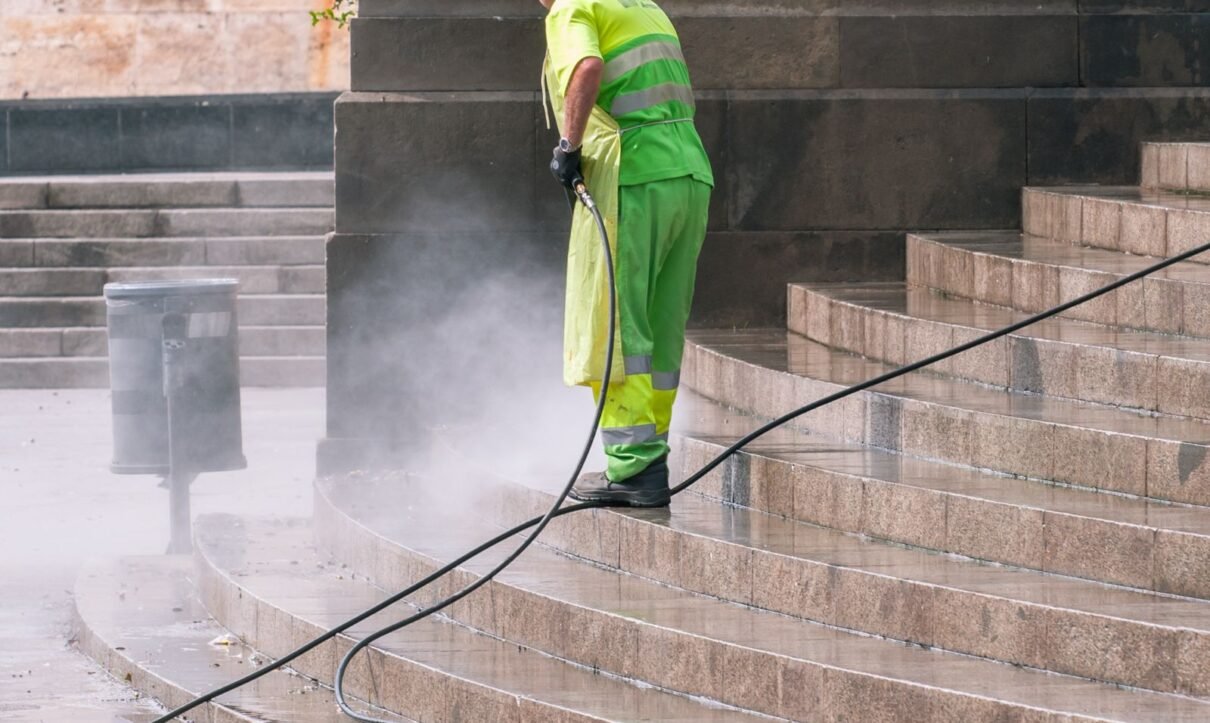
Power washing uses a strong stream of water to knock dirt loose. Professional machines often run between 2,500 and 4,000 PSI, and many also heat the water. That combination cuts through mud, grease, gum, and ground-in grime fast.
High pressure works best on hard, tough surfaces. Concrete driveways, sidewalks, brick pavers, and stone steps can handle the force. So for oil drips on the garage apron or a slick, dark patio, power washing is usually the fastest fix.
What Is Soft Washing?
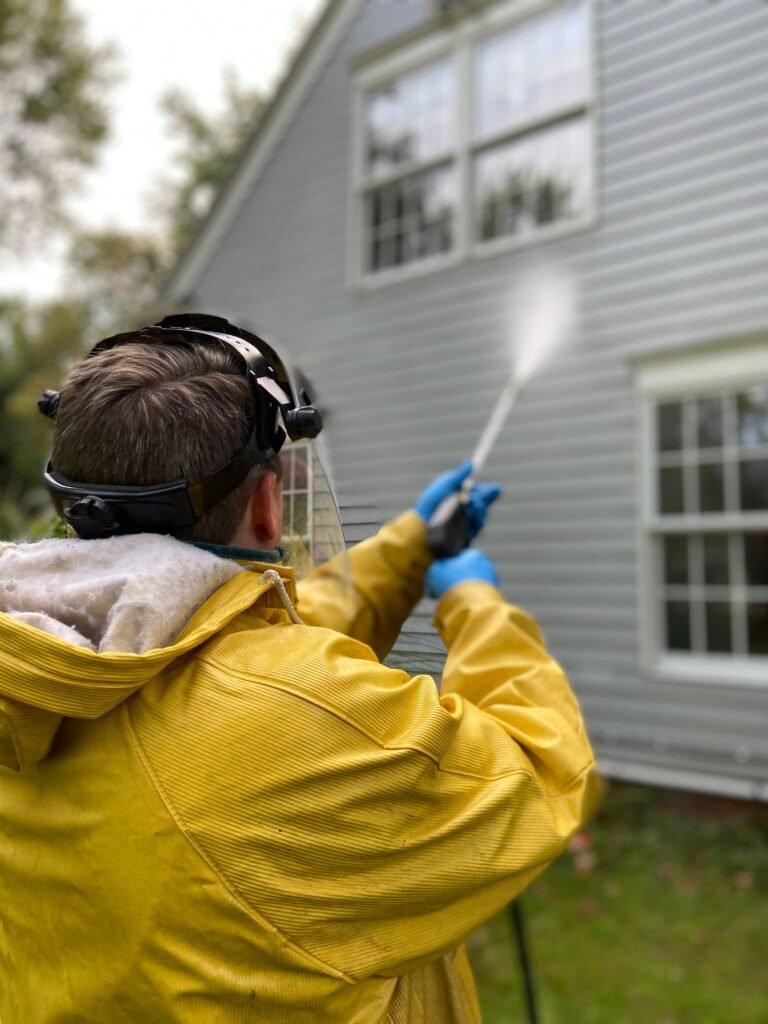
Soft washing takes the opposite approach. Instead of force, it relies on a gentle cleaning solution and low pressure, close to what a garden hose puts out. The crew applies the solution, lets it work on mold, mildew, and algae, and then rinses it away.
Because the solution kills growth down to the root, results usually last longer than a quick spray. That is why soft washing is the safer pick for siding, stucco, painted wood, and asphalt shingle roofs. Those black streaks on many Chicago-area roofs, for example, are often algae that a gentle wash removes without harming the shingles.
Power Washing vs Soft Washing: Key Differences
- Pressure. Power washing uses high pressure, while soft washing stays low.
- Cleaning action. Power washing removes dirt by force. Soft washing, on the other hand, uses a solution that breaks down growth.
- Best surfaces. Hard concrete and stone suit power washing. Siding, roofs, and painted surfaces need soft washing.
- Lasting results. Soft washing kills mold and algae, so they take longer to return.
Power Washing vs Soft Washing by Surface
Here is a quick guide for the most common jobs around the house:
- Driveways and sidewalks: power washing
- Patios, pavers, and stone steps: power washing at a careful setting
- Vinyl and aluminum siding: soft washing
- Asphalt shingle roofs: soft washing only
- Stucco and painted wood: soft washing
- Wood decks and fences: low pressure with a wide tip, then a fresh seal
Siding makers agree that care matters. For example, the Polymeric Exterior Products Association says a power washer can be used on vinyl siding, but with caution. It also notes that some makers limit the pressure or advise against it entirely.
The Risks of Too Much Pressure
More pressure is not always better. A narrow, high-pressure tip can gouge soft wood and leave lines in concrete. On siding, it can drive water behind the panels, where it soaks the wall and feeds mold. It can also break window seals, blow out caulk, and strip paint. Worse, blasting a shingle roof knocks off the granules that protect it, which can shorten its life.
How to Choose Between Power vs Soft Washing
Start with what the surface is made of. If it is hard and bare, like concrete, high pressure is fine. If it is soft, painted, or layered, like siding or shingles, choose soft washing. Also, many homes need both: a soft wash for the house and a power wash for the driveway and walks.
Timing matters too. In the Chicago area, late spring through early fall works best, since the solution needs mild weather to do its job. Our guide to the best time to power wash your home covers the seasons in more detail.
Let the Pros Handle It
Ernest Windows has cared for Chicago-area homes since 2004. Through our sister company, Ernest Power, we offer both power washing and soft washing, so we always match the method to the surface. Our crews carry full insurance and use commercial-grade gear.
Learn more about our exterior cleaning service, or call 1-800-270-6228 for a free estimate. We will look at your home and recommend the safest way to make it shine again.